Briefing@garrettaogv747
Peptide Purity & Quantitation Testing
3 min read
Confirmed > 99% Lab-grade Peptides
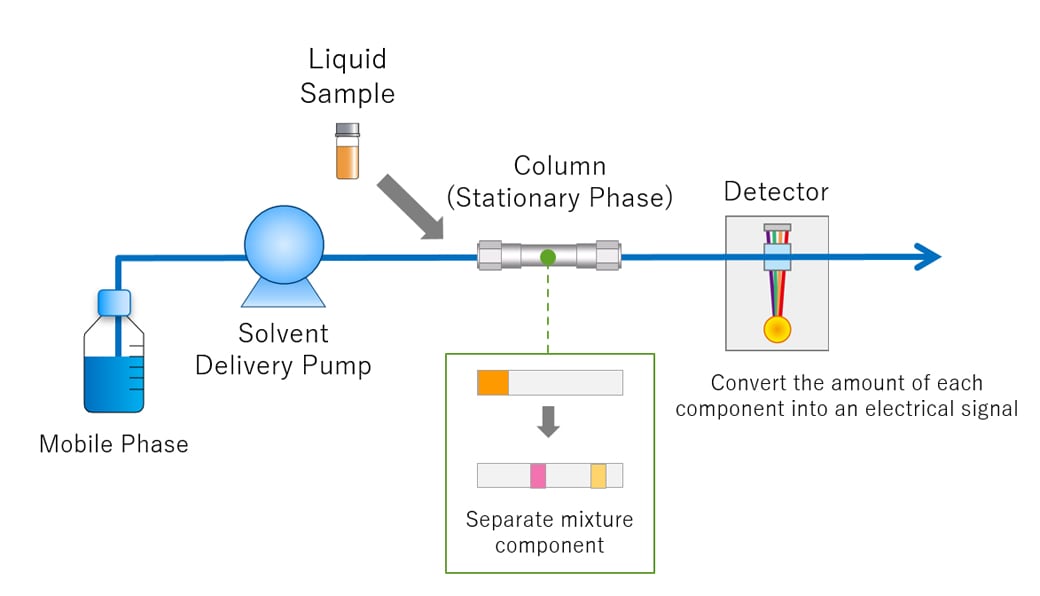
A functional assay measuring downstream signaling-- or an architectural research study utilizing NMR or X-ray crystallography-- requires the greatest pureness readily available. Crystallographers particularly commonly call for ≥ 98% purity due to the fact that also small impurities can protect against crystal development or introduce problem into the crystal lattice. As particles leave the column, they go through a detector-- typically a UV detector readied to 214 or 220 nm, wavelengths where the peptide bond soaks up light highly. The detector records how much UV light is absorbed with time, generating a graph called a chromatogram. This guide breaks down what pureness in fact implies in peptide chemistry, just how it's determined, what the contaminations are, and how to check out the paperwork that confirms a peptide is what it claims to be.Store Coa-verified Research Peptides
We use GC-MS, ICP-MS, and other approaches to find contaminations, making certain item safety and security and regulatory conformity. Peptide sequencing is vital for identifying the specific amino acid sequence of peptides, consisting of alterations like phosphorylation or acetylation. Sequencing allows researchers to comprehend the organic role Go here of the peptide and its communication with various other particles, aiding in the layout of practical peptides for diverse applications. The peptide example is dissolved in a compatible solvent and packed into an autosampler.- Product summaries and classifications do not indicate any type of healing outcomes.
- One core approach is High-Performance Liquid Chromatography (HPLC), the gold criterion for assessing peptide pureness.
- It is an area-percent pureness dimension, not a total identification or activity examination.
- The purity percentage comes from comparing the area of the main optimal to the overall area of all found heights.
- These logical methods are basic in peptide quality control and you will often get HPLC and MS data with a research study peptide order.
- These are beneficial in the best setting, however they ought to be interpreted as method-specific evidence instead of an universal substitute for HPLC and MS.
Peptide Purity And Accuracy: Just How Labs Verify Structure
The gold standard for determining peptide pureness is high-performance liquid chromatography, generally abbreviated as HPLC. If you see a pureness portion on a peptide product, it almost certainly originated from an HPLC analysis. This issues due to the fact that peptides are built one amino acid at a time with solid-phase peptide synthesis (SPPS). At each action, there's a tiny possibility that something fails-- an amino acid doesn't connect, the incorrect modification takes place, or Peptide Distributor a side response produces an unintended byproduct. Over a chain of 10, 20, or 40 amino acids, those tiny per-step mistake prices substance.
Enhancing HPLC, research laboratories utilize Mass Spectrometry (frequently combined as LC-MS) to verify the peptide's molecular weight and series identification. Mass spectrometry supplies molecular confirmation by spotting the precise mass of the peptide and any co-eluting types or trimmed series with high precision. With each other, HPLC and MS information enable experts to confirm that the peptide's composition matches what it must be (right amino acid sequence and anticipated alterations) and that no substantial impurities are present. Not every application demands 99% purity, and filtration is a substantial part of peptide production price. Trace amounts of solvents utilized during synthesis and purification-- acetonitrile, dimethylformamide (DMF), dichloromethane-- can remain in the end product. These are typically present at very low degrees in appropriately manufactured peptides and are governed by ICH Q3C guidelines for appropriate limitations. If the target peptide's top represent 99.1% of the total height area, the peptide is reported as 99.1% pure by HPLC. Several trustworthy study peptide providers use third-party laboratories; some conduct in-house screening with magazine of research laboratory credentials.